
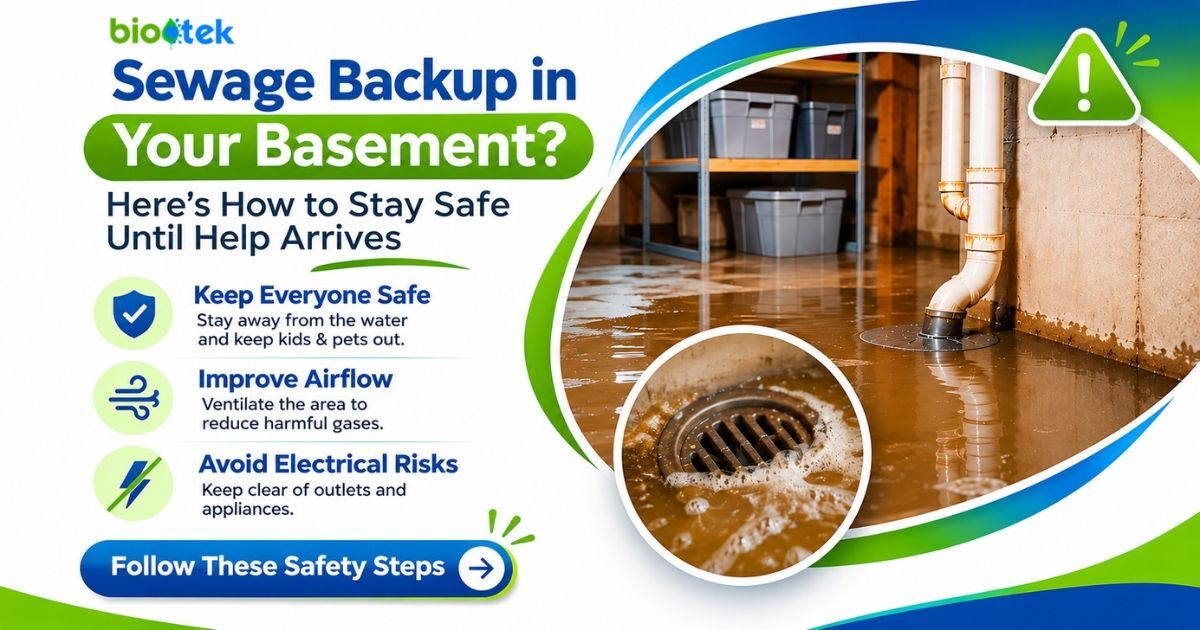
You head downstairs, and the smell hits you before the light comes on. Dark water is pooling around the floor drain, and it’s still rising. Your first instinct is to grab a mop. Don’t.
A sewage backup is a health emergency first and a cleaning job second. This guide walks you through the minutes and hours before sewage backup cleanup begins, so you can protect your family, your home and any future insurance claim. It also explains what professional cleanup involves, so you know what to expect when the crew arrives.
That Smell in the Basement Isn’t Just Water
Sewage that comes up through a floor drain, toilet or utility sink carries human waste, bacteria and viruses. The NYC311 guide to sewage and flood cleanup warns that direct contact can infect your eyes, skin, stomach or intestines. That’s why this water needs different handling from a leak in a clean supply line.
In New York City, most backups don’t start with heavy rain. According to the NYC Department of Environmental Protection, the most common cause is blocked pipes from grease, wipes and other items poured or flushed down drains. Storms put extra pressure on the system, though, and that’s when basement flooding and sewage tend to arrive together.
Basements take the hit because they sit lowest. When the line can’t carry wastewater away, it comes back up through the first opening it finds.
Your First Hour: Three Moves That Matter Most
You don’t need to fix anything right now. Your job is to keep people safe and get help moving.
Get everyone out and keep them out
Move children, pets and anyone with a weakened immune system away from the basement. Close the door behind you. NYC311 advises keeping these groups out until cleanup is complete, not just until the water drains.
Treat electricity as the bigger threat
Never step into standing water if outlets, extension cords or appliances sit nearby. If you can reach your main breaker without touching water, switch off power to the basement. If you can’t, leave it and tell the professionals when they arrive.
Report it to 311 right away
Call 311 or use the city’s online form to report sewage backing up into your home. Write down your 311 tracking number and any DEP service request number. DEP says it inspects the location within six hours, though heavy rain or snowmelt can slow that down.
Then stop using water upstairs. Every flush and every load of laundry sends more wastewater toward the blockage.
Hands Off: What Not to Do While You Wait
Waiting feels useless, so people start cleaning. But this is biohazard cleanup, and most injuries and infections start right here.
Avoid these mistakes:
- Using a household wet/dry vacuum. It spreads contamination and isn’t built for sewage.
- Running fans, dehumidifiers or space heaters near standing water.
- Pouring bleach into the water. It won’t make the water safe to touch, and bleach mixed with ammonia-based cleaners releases toxic fumes.
- Carrying soaked boxes or rugs up through the house.
If you must go down for a moment, NYC311 recommends rubber boots, waterproof gloves and goggles. Wash your hands, boots and clothes in hot, soapy water afterward. Anything beyond a quick look belongs with people who are trained and equipped for it.
Whose Pipe Is It? A Question Every NYC Owner Should Ask
New York splits responsibility at the street. DEP maintains the city’s sewer mains, while the property owner owns the sewer service line that connects the building to that main.
If DEP finds the problem in the city’s sewer, it starts the repair. If the blockage sits in your private line, you’ll receive a Notice to Repair. Either way, raw sewage cleanup inside your home is something you’ll need to arrange.
A few steps protect you at this stage:
- Take photos and video before anything is moved.
- Note the time you found the backup and keep receipts for any extra costs, like a hotel stay.
- Check your homeowners policy. Standard policies don’t always include sewer backup, so confirm your coverage before you file.
- If you believe the City caused the damage, DEP directs owners to file a claim with the NYC Comptroller’s Office within 90 days.
Renters should tell their landlord immediately and still report the problem to 311.
What Proper Sewage Backup Cleanup in NYC Looks Like?
Professional sewage backup cleanup in NYC follows a set order, and each step has a purpose.
- Safety check and containment. The crew checks for electrical hazards and seals off the area so contamination doesn’t travel upstairs.
- Extraction. Wastewater and solids come out with equipment built for contaminated water.
- Removal of porous materials. NYC311 lists carpet padding, upholstered furniture, mattresses, books and stuffed toys among the items to discard when they can’t be fully cleaned and dried. Wet drywall and insulation are cut out as well.
- Cleaning and disinfection. Hard surfaces are scrubbed and disinfected, not just rinsed.
- Drying. This step decides whether you end up with mold. City guidance says to discard anything that can’t be cleaned and dried within 24 to 48 hours.
Skip a step, and sewage water damage keeps working after the crew leaves. Weeks later, you’ll notice a sour smell in the walls or mold behind the baseboards.
That final drying stage is where Biotek NYC stands apart. Our background in mold remediation means moisture control and mold prevention get as much attention as extraction.
Before You Head Back Downstairs
A sewage backup feels overwhelming, but the right first moves are simple. Get people out, stay away from the water and the wiring, report it to 311 and record the damage. Then leave the rest to a team with the right gear.
If you’re dealing with a backup right now, call Biotek NYC for sewage backup cleanup and get your basement safe, clean and dry again.
FAQs
Usually, yes, if the sewage stays in the basement and you keep the door closed. Stop using water upstairs and keep children and pets away. Leave if strong odors spread or the water reaches electrical outlets or equipment.
It depends on where the blockage is. If the City caused the damage, you can file a claim with the Comptroller within 90 days. Otherwise, sewage backup cleanup in NYC usually falls to your homeowners policy, if it covers sewer backup.
A small toilet overflow on a hard floor is manageable with gloves, goggles and a bleach solution. NYC311 suggests one cup of household bleach in two gallons of hot water. Anything larger, or anything touching carpet or drywall, needs professionals.
Mold takes hold fast in damp basements. After basement flooding, city guidance is to discard items that can’t be cleaned and dried within 24 to 48 hours. Professional drying equipment speeds this up and checks moisture hidden inside walls.
Throw away any food that touched sewage, even if it’s packaged. Mattresses, carpet padding, upholstered furniture, pillows, stuffed toys and most paper products should go too. Hard items like metal, glass and sealed plastic can be cleaned and disinfected.
 CALL US
 CONTACT US